
Most contractors mess up social media in the same way. They post when they remember, ignore comments for days, and wonder why nobody calls.
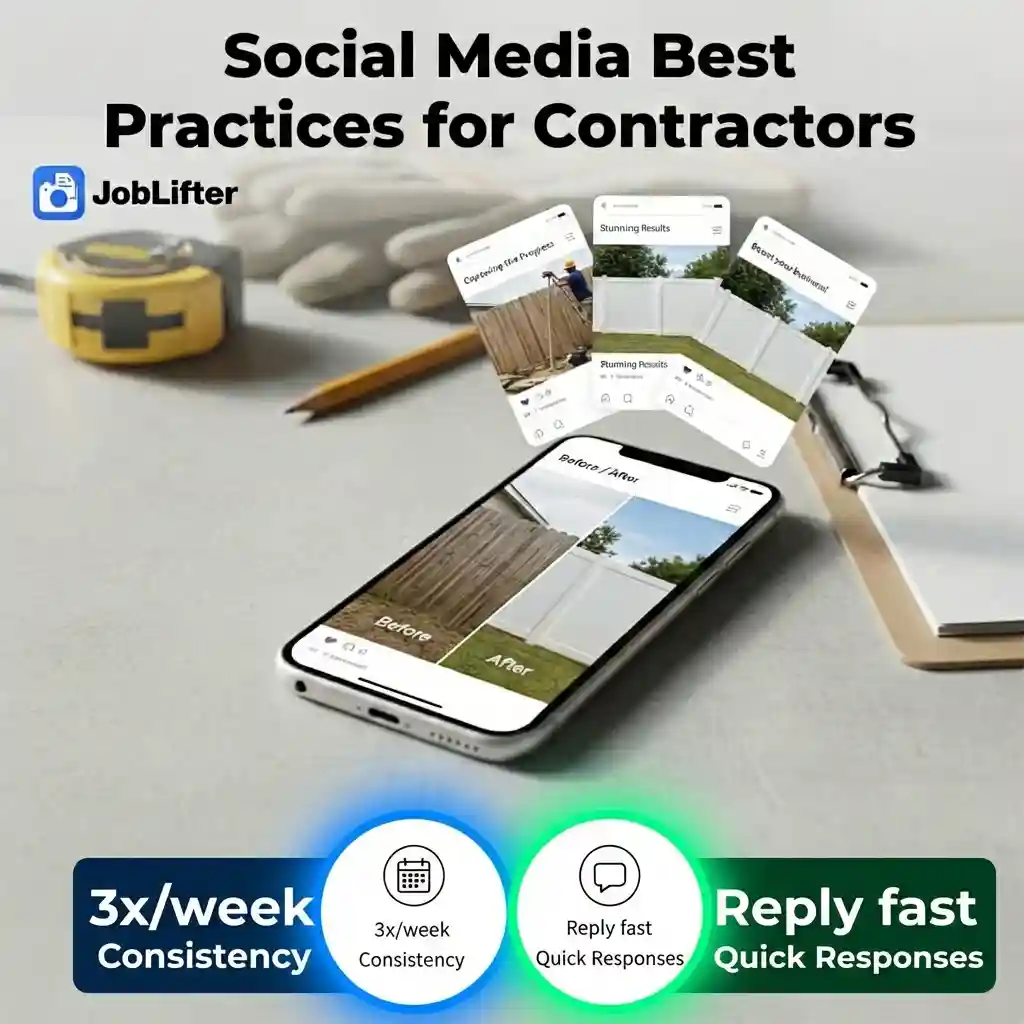
Social media best practices for contractors boil down to consistency and showing real work. Get in the habit of posting 3-4 times per week minimum. Don’t get lazy and respond to messages within a few hours. Use actual job photos instead of stock images. That’s the foundation. Everything else is optimization.
The contractors getting leads from social media aren’t doing anything complicated. They’re just doing the basics consistently while their competitors post twice a month and call it a strategy.
Your Phone Already Has Everything You Need
Stop waiting for perfect conditions to create content. You don’t need a professional camera or a content creator on staff.
Your phone camera works fine if you understand basic lighting. Natural daylight beats interior lighting almost always. Take photos from multiple angles – wide shots showing the full space, close-ups of details and craftsmanship. Take way more photos than you think you need because half will be unusable.
The problem most contractors hit isn’t taking photos. It’s turning those photos into posts that don’t look amateur. You’ve got 47 photos of a kitchen remodel on your phone but creating a before-and-after comparison with your logo and contact info requires design skills you don’t have time to learn.
JobLiftr.com handles exactly this gap. Upload your job photos and it formats them into professional posts. Before and afters, branded images, layouts that look designed. You’re not learning Canva or Photoshop, you’re uploading photos and getting back content ready to post.
Post on a Schedule or Don’t Bother
Posting once every two weeks doesn’t work. Neither does posting seven times one week then disappearing for a month.
Pick specific days. Tuesday and Friday. Monday, Wednesday, Friday. Sunday and Thursday. Whatever fits your schedule. Then post on those days whether you feel like it or not. Social media algorithms reward consistency more than volume.
Batch your content creation. Spend 90 minutes on Sunday creating posts for the week. Schedule them through Facebook’s built-in scheduler or Instagram’s creator tools. Then you’re not scrambling every day trying to think of what to post.
Most contractors overthink this. You’re showing the work you already did. You already took photos on the job site. You just need to turn those photos into posts, which takes maybe 15 minutes per post once you have a system.
Video Outperforms Everything Else
A 45-second video of you explaining what you’re doing on a job site gets more reach than five photo posts combined.
Film yourself talking. Explain the problem you found, what you’re fixing, why it matters. Your expertise comes through when people hear you talk about your work. Most people watch with sound off so add captions – both Facebook and Instagram can auto-generate these now.
You don’t need fancy editing. Point the phone, hit record, explain what you’re doing. Stop recording. Post it. The unpolished quality actually works better because it feels authentic instead of like an ad.
Time-lapse videos perform well too. Set your phone up somewhere safe on the job site, record a time-lapse of the work progression, speed it up. A full day of work condensed into 30 seconds shows the transformation in a way photos can’t.
Educational Content Beats “Call Us” Posts Every Time
Nobody wants to follow an account that only posts “Call us for a free estimate!” That’s not content. That’s noise.
Post information homeowners actually find useful. How to spot early signs of foundation problems. What questions to ask before hiring a contractor. How to prepare your home for a renovation. When to repair versus replace. Red flags that mean you need professional help right now.
This positions you as an expert instead of just another contractor begging for work. When someone needs your services six months from now, they remember the helpful content you posted.
Educational content also gets shared more. Someone sees your post about preventing frozen pipes and shares it in their neighborhood Facebook group. You just got free visibility to a bunch of local homeowners.
Respond Fast or Watch Leads Go to Competitors
When someone comments on your post or sends a message, they’re shopping for a contractor right now. If you respond in 20 minutes, you will probably get the job. If you respond in 20 hours, they already called someone else.
Facebook and Instagram track response rates. Businesses that respond quickly get prioritized in local search. If you take two days to respond, the platforms assume you’re not serious about customer service and show your content to fewer people.
Turn on notifications. Check messages in the morning, lunch, and evening. A quick “Got your message, I’ll call you this afternoon with a quote” is better than no response. People just want to know you saw their message.
Show Your Team, Not Just Projects
People hire people, not companies. Your social media should show the humans behind the business.
Introduce team members. Post photos from job sites with your crew actually working. Celebrate work anniversaries. Show the company culture. This builds trust because people see real humans instead of a faceless business.
Someone scrolling through your page sees your team laughing while working on a project and thinks “Those seem like people I’d be comfortable having in my home.” That feeling matters more than you think.
Different Platforms Need Different Content
Facebook isn’t, Instagram isn’t TikTok. What works on one platform doesn’t automatically work on another.
Facebook allows longer captions and people expect more context. Tell the story behind the project. What challenges did you solve? What was surprising about this job? Include 4-5 photos in a carousel post showing different angles and stages.
Instagram wants shorter captions with strong visuals leading. The first line matters because most people won’t expand to read more. Use 10-15 relevant hashtags mixing local tags (#DenverContractor), service tags (#KitchenRemodel), and community tags (#HomeImprovement).
TikTok and YouTube are video-first. Behind-the-scenes content, educational explainers, before and afters, time-lapses. The algorithm favors longer watch time so create content people actually watch all the way through.
Track What Actually Works
You can’t improve what you don’t measure. Every platform shows you which posts performed best.
Look at engagement rate, not just likes. A post with 15 likes and 8 comments from interested people beats a post with 60 likes and zero comments. Comments from people asking questions or saying they need your services matter. Likes from your aunt don’t.
Check which posts drove the most profile visits, website clicks, and direct messages. That’s what matters for lead generation. Double down on content types that drive those actions.
Most contractors never look at their analytics. They post random content and wonder why social media doesn’t generate leads. The data tells you exactly what your audience wants to see more of.
Common Mistakes That Kill Results
Only posting promotional content. Nobody follows accounts that constantly beg for business. Mix in educational content, team spotlights, project stories.
Using terrible photos. Blurry, dark, poorly framed images make your business look unprofessional no matter how good your caption is. Lighting matters. Composition matters. Take 30 seconds to frame the shot properly.
Ignoring comments and messages. This tells potential customers you don’t care about communication. If you can’t respond to a Facebook message, why would they trust you to return their phone calls?
Posting inconsistently. Five posts one week then nothing for a month destroys any momentum you built. The algorithm forgets about you and has to rebuild your reach from scratch.
Not engaging with other accounts. Social media is social. Like and comment on other local businesses’ posts. Share relevant content from suppliers and industry partners. They’ll often reciprocate and expose your business to their audience.
Make Content Creation Manageable
The reason most contractors fail at social media isn’t lack of content. It’s that creating professional-looking posts takes too much time.
You have the photos. You did the work. You took pictures on job sites. But turning raw photos into posts that don’t look amateur requires design skills you don’t have.
This is where tools like JobLiftr become essential. You’re not spending hours learning design software. You’re uploading your real job photos and getting back professional-looking branded content. Before and after layouts, project showcases with your logo and contact info, posts that look like you hired someone to make them.
The tool bridges the gap between having content and having content that looks good enough to post. Because mediocre-looking posts get scrolled past, even if the work itself is excellent.
Keep It Real
Authenticity beats perfection on social media. Don’t wait until you have perfect content to post. A slightly imperfect video showing real work beats nothing.
Show mistakes you fixed. Talk about problems you encountered and how you solved them. That demonstrates expertise better than only showing perfect finished projects. People trust contractors who are honest about challenges, not ones who pretend every job goes perfectly.
The contractors winning on social media aren’t doing anything fancy. They show up consistently. They post real work using tools to make it look professional. They respond fast. They engage with their audience. That’s it.